On 14 April 2018 the members of the LRCF set out to visit the study and reintroduction site of Lithops schwantesii subsp. gebseri on the farm Estorffdank with the aim of monitoring the survival of the young, two-year old plants that were reintroduced into their former habitat a year earlier (see Reintroduction of Lithops schwantesii subsp. gebseri into its natural habitat in Namibia). Of the 221 plants reintroduced in April 2017, 21 (9.55%) survived and were found to be in very good condition despite well below average rainfall at the reintroduction site (Fig 4 & 5). This figure is just under the 10-20 % survival rate expected when planting cultivated Lithops plants into natural habitats. Most of the reintroduced young plants had been fatally preyed upon by mice and large insects.
A batch of 208 three-year old plants were grown in the Lekkerbly Nursery & Creché at the Cole Lithoparium in individual plants trays (Fig 6) and were lifted out of the trays just before being transported to the reintroduction site (Fig 7). The plants were again planted around the marked points at the reintroduction site. The harsh sun had discoloured some of the plastic markers from red to white (Fig 8).
Together with the 21 surviving plants from the 2017 planting, the reintroduction site now has 229 three-year old plants which will be monitored over the next year until the next batch, presently cultured in the Cole Lithoparium, will be ready for reintroduction, probably in 2019.

Fig 4. A three-year old Lithops schwantesii subsp. gebseri plant at the reintroduction site one year after being transplanted. Note the broken soil crust as this plant pushed upwards after rain.
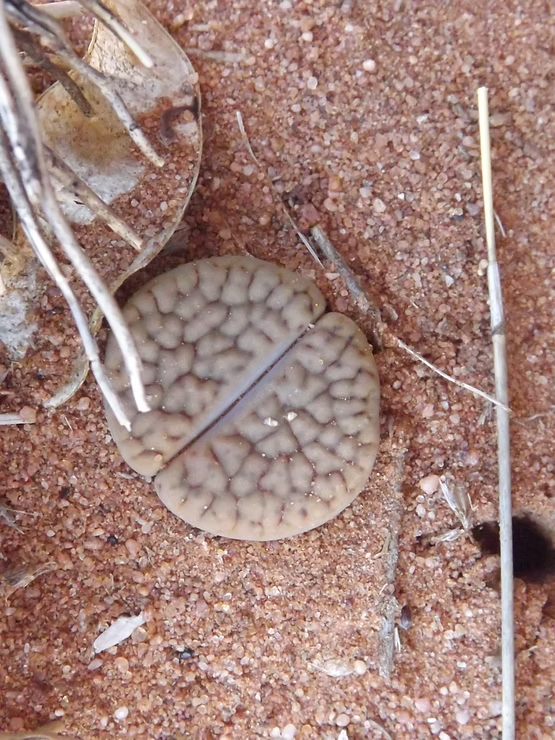
Fig 5. A healthy and strong looking three-year old Lithops schwantesii subsp. gebseri plant at the reintroduction site one year after being transplanted
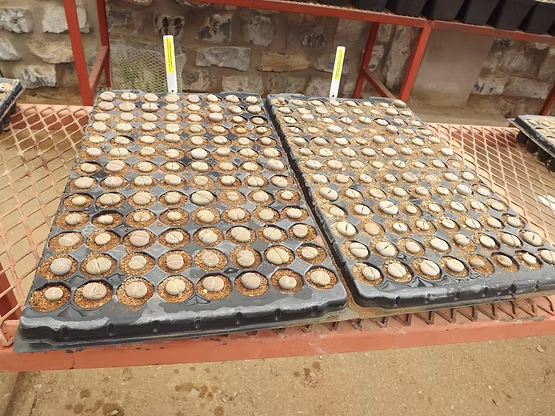
Fig 6. Three-year old Lithops schwantesii subsp. gebseri plants in individual plant trays as cultured in the Lekkerbly Nursery & Creché.

Fig 7 A batch of 208 Lithops schwantesii subsp. gebseri plants ready for planting in the field.

Fig 8 A sun-bleached marker at the reintroduction site.
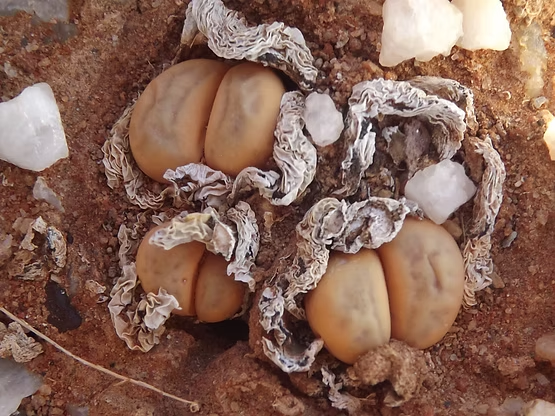
Fig 11. Lithops meyeri in the Richtersveld. This very large population, north of Lekkersing, was visited on 20 March 2018. Although there had been very little rain before visiting the colony most of the plants were in a fair condition. However, the remains of some plants, especially multi-headed plants were obvious.

Fig 12. The characteristic ochre yellow Lithops schwantesii schwantesii marthae at the type locality on the Pockenbank Mountains. In this area, being hit by one of the worst droughts for many decades, the few plants found were small but still in fair condition.

Fig 13. Lithops pseudotruncatella groendrayensis 10 days after good rains at Karanas. This vast population in the white quartzite field is probably the largest Lithops colony in Namibia consisting of many thousands of plants.

Fig 14. Lithops ruschiorum near Henties Bay. These plants, that survive largely due to the fog that frequently moves as far as 40km inland from the coast, were in good condition during the visit to the colony on 1 April 2018.

Fig 15. Lithops pseudotruncatella pseudotruncatella riehmerae at the type locality south-east of Windhoek.

Fig 16. Lithops pseudotruncatella volkii after good rain at the type locality south of Windhoek.
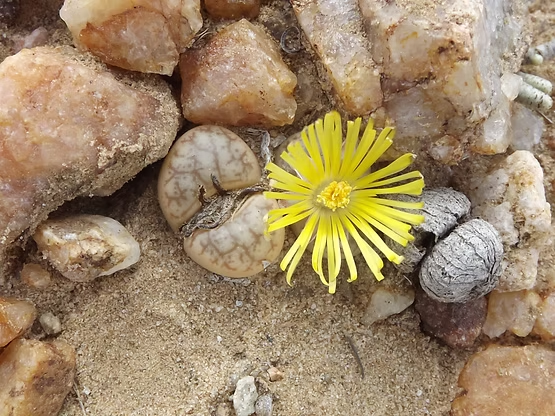
Fig 17. Lithops pseudotruncatella pseudotruncatella pseudotruncatella (*alpina) flowering late afternoon on 2 April 2018

Fig 18. Lithops pseudotruncatella pseudotruncatella pseudotruncatella (*alpina) with a young 2-year old plant. Many young plants were seen in the remainder of this colony which was partly destroyed a few years earlier when the farmer ploughed the field where a large part of the colony grew. The present colony is still several hundred plants strong. The LRCF will monitor this population over the next few years and has made contact with the landowner and the local people in an attempt to prevent any further damage to the colony in this area of housing development.
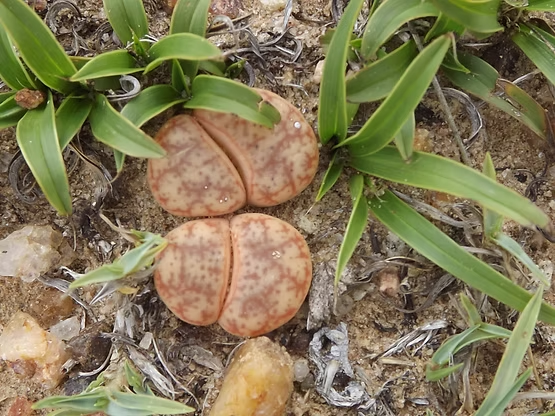
Fig 19. A lovely reddish-brown Lithops pseudotruncatella pseudotruncatella pseudotruncatella (*alpina).

Fig 20. Lithops vallis-mariae growing in grey calcrete at the colony near Berseba, Namibia. This small colony consisting of less than 20 plants has been stable for many years despite being very close to human activities and an animal watering point. One new young plant, (estimated to be three years old) was found in the colony.

Fig 21. The very pale form of Lithops schwantesii schwantesii marthae in flower. Several of the plants in this colony are individually marked and have been monitored for the past four years.

Fig 22. A group of pale Lithops fulviceps fulviceps at the Cole locality C415.

Fig 23. A green individual plant in a Lithops karasmontana karasmontana aiaisensis colony near the type locality of this taxon.
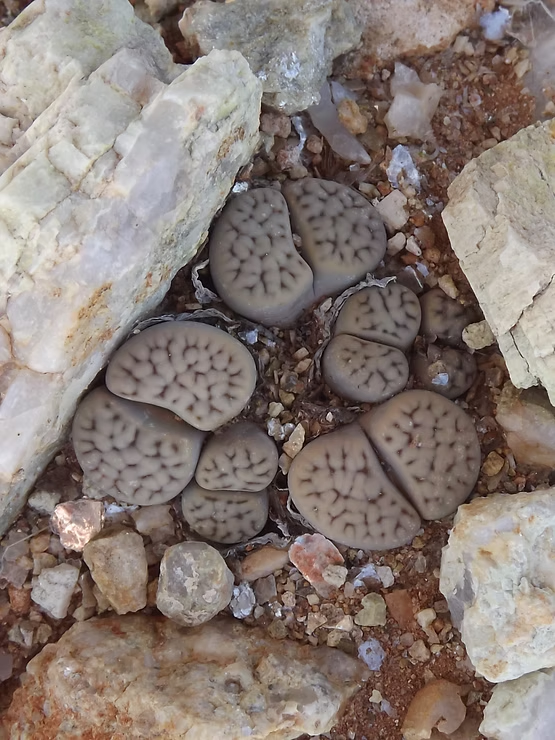
Fig 24. Lithops karasmontana in good condition after good rain at the colony near Grünau.

Fig 25. Lithops hermetica in poor condition as no rain had fallen in the Sperrgebiet at the time that the colony was visited.
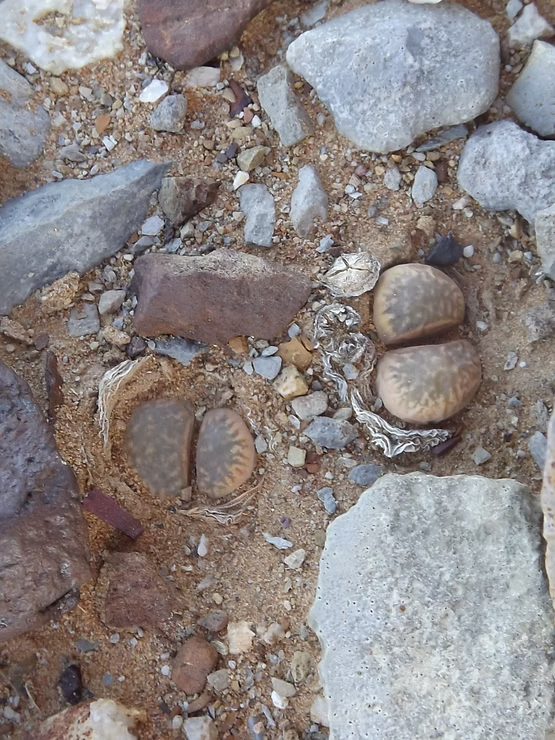
Fig 26. Lithops comptonii comptonii looking to swell to its full potential when rain falls.

Fig 27. Lithops comptonii weberi.

Fig 28. Lithops comptonii weberi.